
Key factors to consider when choosing an Optimist sail
Hello everyone!
I’m continuing our previous discussion on equipment, this time focusing on sails instead of spars. (Thanks for all the positive feedback on the spars post)
Just like choosing the right spars, selecting the right sail can significantly support a sailor’s development. Together, the right sail and spars form a complex system that requires careful attention to perform as its best.
Optimist Sail Specifications
The class rules dedicate an entire section (Section 6) to sails, covering rules on construction and materials. Sailmakers must adhere to these specifications due to the one-design nature of the Optimist class. Most of these rules address dimensions, batten pocket placement, reinforcement methods, and positioning. Beyond this, sailmakers can decide on elements such as sail draft, entry profile, and batten stiffness, allowing for a degree of customization. This flexibility means that a compliant sail can be designed for sailors weighing under 30 kg as well as for those over 50 kg.
Types of Sail Cuts
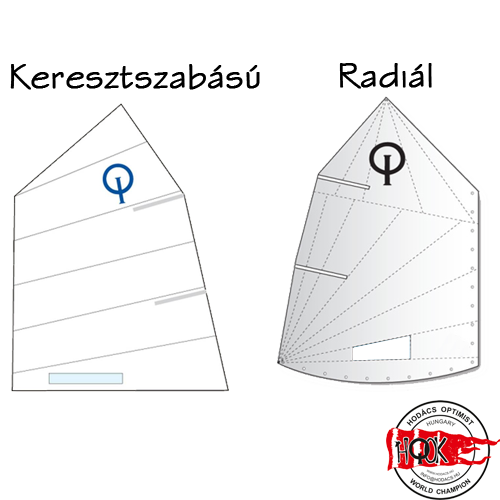
The panels that make up a sail can vary in size and shape to adjust where and how the sail’s draft is positioned. There are three main sail cuts:
- Crosscut: The sail panels run parallel to the boom.
- Radial cut: The sail panels radiate from the clew and/or the head.
- Mixed cut: Previously more common, but less widely used today.
- Crosscut sails: Tend to be less sensitive to handling errors, making them forgiving of minor imprecisions in sail handling.
- Radial cut sails: Require precise handling and greater concentration, which can suit more experienced sailors.
Key Considerations in Sail Selection
When choosing a sail, consider factors such as:
- Typical conditions at your training or racing location (e.g., strong versus light winds, wave patterns).
- Sailor’s weight and whether they’re in a growth phase.
- Sailor’s sailing style (e.g., “grinding” vs. “free-flowing” technique).
- Sail handling habits—whether they make frequent and precise adjustments or only when prompted.
Trends and popularity can also influence sail choice. While certain brands are widely used, others outside the mainstream can also perform well, as evidenced by past championships won with Windesign sails or by the Dutch national team using Optimax sails.
Summary of Popular Sails and Recommendations
To simplify your choices, here’s a reference table with some popular sail options, recommended weights, and categories based on cut type.
|
One Sails |
Olimpic Sails |
J Sail |
|||
|
Type |
Recommended weight |
Type |
Recommended weight |
Type |
Recommended weight |
|
Light |
under 32kg |
Red |
under 38kg |
Green |
under 35kg |
|
Medium |
under 42kg |
Happy |
37-42kg |
Blue |
35-43kg |
|
Medium+ |
42-47kg |
Gold |
41-46kg |
Red |
over 43kg |
|
Heavy+ |
over 47kg |
Platinum-M |
over 46kg |
Black |
over 50kg |
|
|
|
Radial Medium |
38-45kg |
|
|
|
|
|
|
|
|
|
|
North Sails |
Optimax Sails |
||||
|
Type |
Recommended weight |
Type |
Recommended weight |
Type |
Recommended weight |
|
R1 Radial |
under 31kg |
MZX4 |
under 43kg |
Cero |
under 35kg |
|
R2 Radial |
33-41kg |
MZX5 |
over 40kg |
Uno |
35-45kg |
|
R4 Radial |
38-46kg |
|
|
Dos |
over 45kg |
|
R5 Radial |
over 45kg |
|
|
|
|
|
|
|
|
|
|
|
|
Quantum Sails |
Windesign/Optiparts |
||||
|
Type |
Recommended weight |
Type |
Recommended weight |
Type |
Recommended weight |
|
Radial Blue |
under 36kg |
XR-1 Green |
under 45kg |
Durarace Lite |
under 45kg |
|
Radial Green |
36-43kg |
XR-1 Black |
over 46kg |
Durarace Power |
over 45kg |
|
Radial Black |
over 43kg |
|
|
|
|
Additionally, there are excellent local sailmakers such as Imre Fekets, Miklós Tuss, András Lovas, and One Design Sails (1D) led by Panka Csepregi. (Apologies if I missed anyone!)
Set-Up Guides
Most sailmakers provide setup and tuning guides on
their websites, often in table form, so only minimal English skills are required to
follow them. The J Sail and North Sails guides, in particular, are especially comprehensive and filled with useful tips and additional information. If you encounter too much technical jargon, you might consider reaching out to local distributors for help
with translations.
To save you the trouble of navigating multiple websites, I’ve gathered and organized the setup guides for the following brands:
Summary: Choosing the right sail can be challenging. When performance is the goal, it’s worth trying a few different sails - although the saying goes: "if it works well, don’t change it." But remember, sailors are growing and developing both physically and mentally, so their equipment needs periodic fine-tuning.
In conclusion, it’s worth investing time in choosing the right sail and reading the manufacturer’s information. In any technical sport, it always helps to build a good relationship with your equipment manufacturer. The success of your choice will become clear once you start using it.
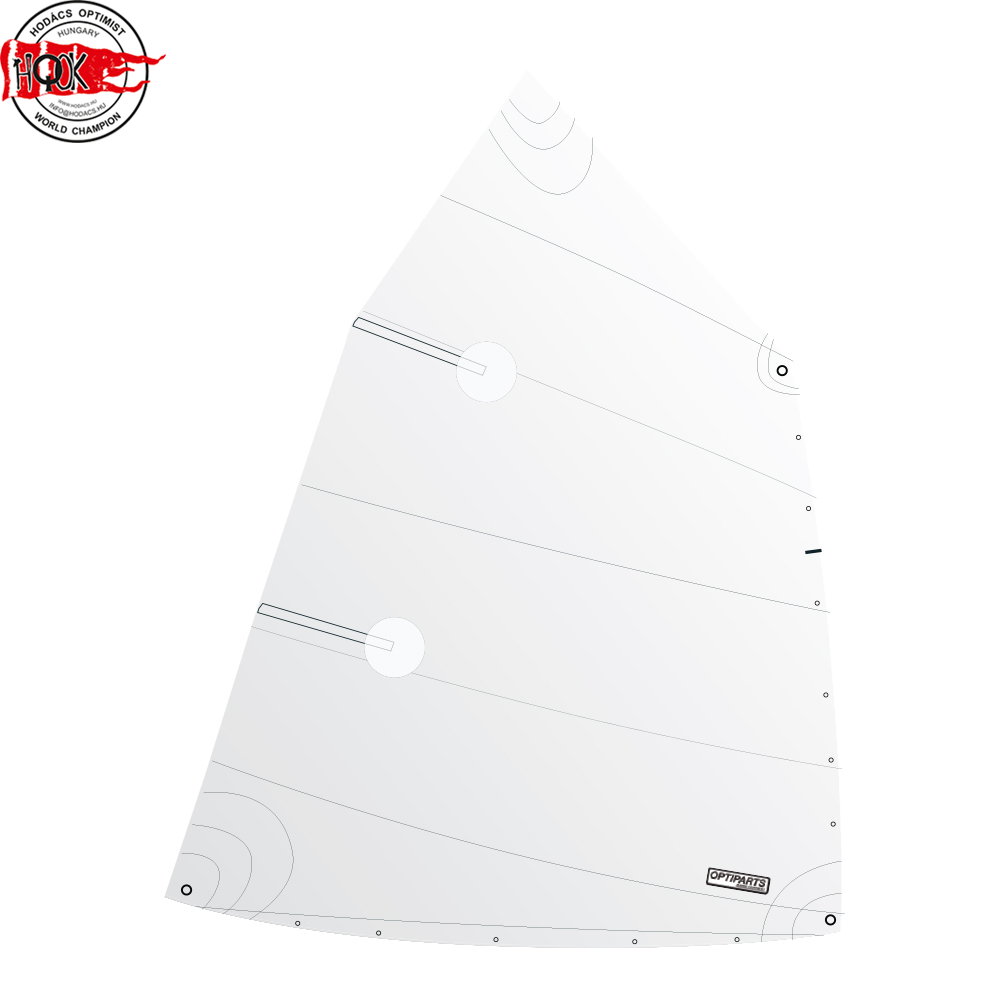
The sail is made of strong 3.8 oz high quality 100% dacron sailcloth, have six panels with nickel plated eyes and heavily reinforced corners. Complete with battens and long sail bag for storage of sail and spars.The sail comes without window, logo and button. Not for racing.
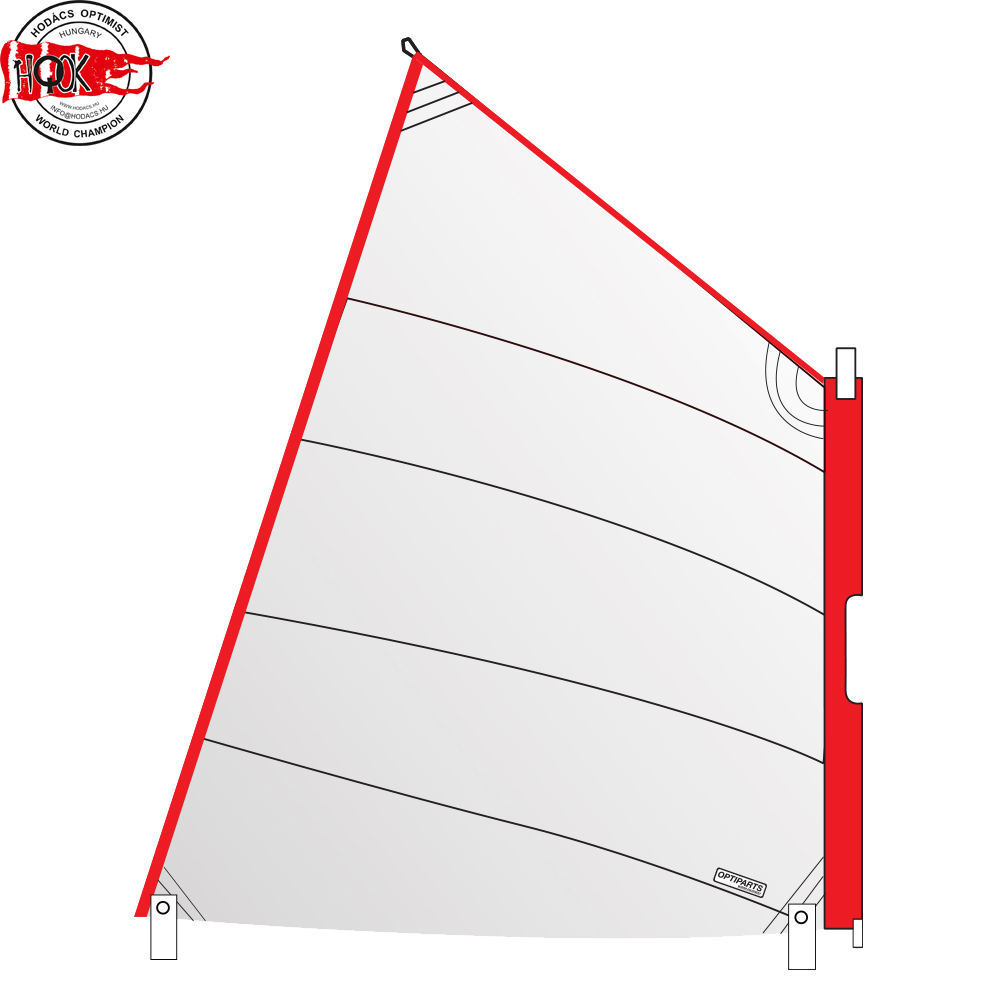
These sleeve pocket sail is ideal for sailing schools. The mast slides in a sleeve pocket while the sail is loose footed on the boom. Made of strong 3.8 oz sailcloth.They have five panels without sailbattens, 4 heavily reinforced corners and webbing loops for the boom. This sail should be used with sleeve school set OW1052.
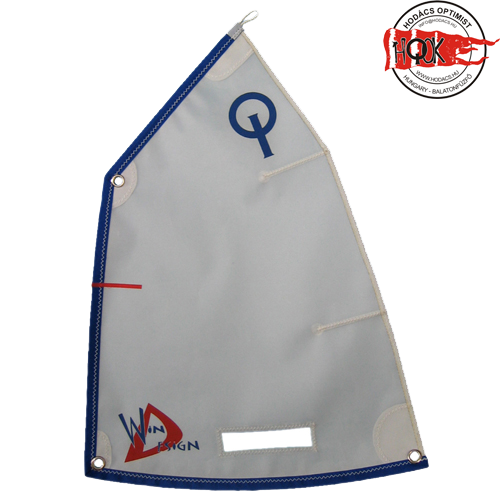
Optimist mini sail, scale 1:6, 47cm high. Made of real Dacron with window and class logo. Reinforced corners with eyelets.