
Why proper optimist sail trim is essential for performance?
Optimist sail setting explained
Hello everyone!
A few weeks (or rather months) ago, I put together an overview of sail types, which you can find here. I often find myself reopening this post, as it's a handy reference that brings together the different types of sails in one place.
Now that we have that, I thought it would be valuable to go a step further and dive into sail trim. In the previous post, I also included the recommended settings from various sailmakers. Today’s post will touch on some of these factory recommendations.
As I’ve often noted, the sail (together with the mast) significantly affects performance. So, it’s not just about finding the right sail-mast combination for each sailor, but also about knowing how to set up the equipment properly.
When I’m at a regatta, I like to walk around and observe how sailors handle, care for, and adjust their equipment. Do they understand what each adjustment does? While this topic is important for everyone, this post is especially aimed at up-and-coming sailors who are still refining these basics.
You can tell at a glance if a sail is roughly set up correctly:
- Condition and consistency of the ties ensuring there is no fraying.
- Tightness of knots.
- Gap between the sail and the mast and boom.
- Position of the sail relative to the mast marking.
- Use of the sail's running ropes.
- Overall sail tension.
If all of this looks good, it’s time to check the 17 ties points for precision. Yes, 17! Here’s the breakdown:
- Corners: There are 5 ties at the corners:
- 2 at the throat, where the sail meets the mast near the top (one perpendicular and one diagonal).
- 2 at the tack, where the sail attaches at the mast-boom junction.
- 1 at the clew, the back corner of the sail on the boom.
- Between corners:There are 12 ties along the mast and boom, with six on each.
Checking Sail
Trim
In practice, I often ask sailors if they’ve set their sail, to which they reply, “Of course.” Then I ask, “All 17 ties?” and get a confused “There aren’t that many!” Yes, while not every tie needs to be adjusted each time, they should all be checked since knots can loosen—especially after a day of strong-wind training or racing.
In general, there are two settings to consider: light wind and heavy wind.
For the boom, a constant gap of 5-7 mm (within the class rule’s 10 mm limit) is ideal, regardless of wind strength. This small gap allows the sail to rotate smoothly over the boom fittings during maneuvers.
At the clew, however, the gap between the sail and the boom should be smaller in strong winds and larger in light winds.
Similarly, the ties along the mast require careful adjustment. Key points:
- In light winds, the top and bottom 2-3 ties along the mast should be
slightly looser, with a gap of 2-3 mm from the mast, while the middle ties
can be closer at around 1-2 mm (although this may vary depending on the sail's shape)
- In strong winds, reverse the setup, with the top and bottom ties tighter and the middle ones slightly looser to accommodate mast bend.
Key
Adjustments for Optimal Sail Shape
In addition to the above, there are three main control lines that affect the sail’s shape, which coaches also check:
- Sprit - controls luff (front edge) tension.
- Vang - controls both the luff and the leech (back edge) tension.
- Outhaul - adjusts the tension on the foot (bottom edge) of the sail.
Adjusting these lines to the wind is crucial. Here’s what can go wrong if these aren’t set correctly:
- If these controls are either too tight or too loose, overall performance will suffer!
Sprit (Luff
Tension)
An overly tight sprit is easy to spot because it
creates a “bulge” from the peak (top of the sail) to the tack (where the sail
meets the boom and mast). This affects both downwind and upwind sailing,
preventing the luff from functioning properly and compromising speed and pointing
ability.
On the other hand, an overly loose sprit creates creases from the throat to the clew. In light wind, a slight looseness in the gaff is acceptable, like the setup visible on the HUN 371 boat in the example.
Vang
The vang needs to be adjusted depending on the
wind conditions. In strong wind, it should be tightened to keep the leech taut
and manage the load on the leech (back edge) of the sail. If it’s too loose, as shown in
the example image, the sail holds too much power, destabilizing the boat and
pushing the bow underwater. This is often visible as an excessively high boom position,
especially in strong wind.
In contrast, an overly tight vangl in light wind prevents the leech from flexing, making the sail less responsive.
Outhaul (Foot Tension)
While I couldn’t find photos of this adjustment,
issues with the outhaul are relatively rare. The only problem may arise if it’s a bit
too tight for the wind strength (or too loose :) )
Summary
Knowing how to set up your sail and understanding
the manufacturer’s recommendations can make a big difference in your boat’s
speed. Don’t rush through rigging and adjusting your sail controls—spending time
on these details is essential in a technical sport like sailing!


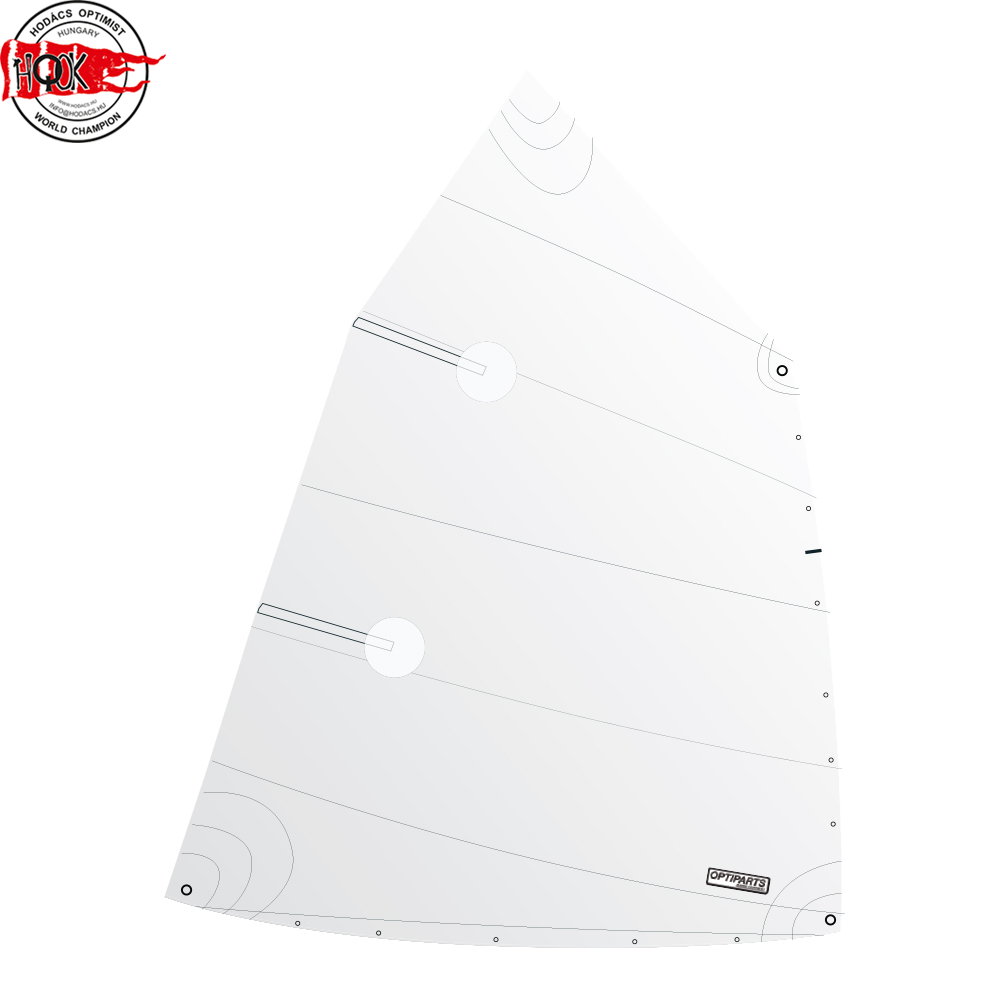
The sail is made of strong 3.8 oz high quality 100% dacron sailcloth, have six panels with nickel plated eyes and heavily reinforced corners. Complete with battens and long sail bag for storage of sail and spars.The sail comes without window, logo and button. Not for racing.

Mini reel of 1,2 mm Vectran line in black with gold detail. Perfect for Optimist sailors needing durable, low-stretch cord for lacing lines . 1.2mm Vectran minireel; 15meter long.
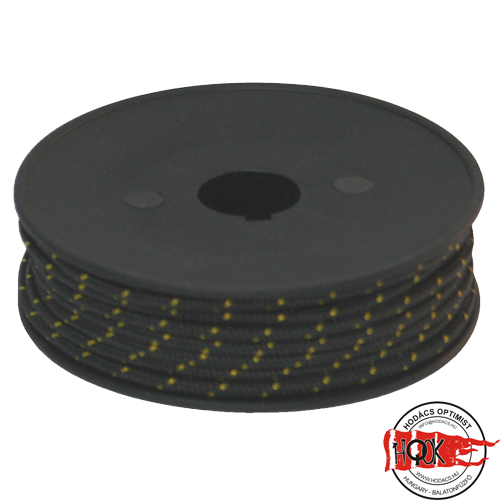
Compact 2,2 mm black Vectran line with gold fleck, designed for Optimist corner ties. Strong, low stretch, and 2.2mm Vectran minireel; 8meter long.
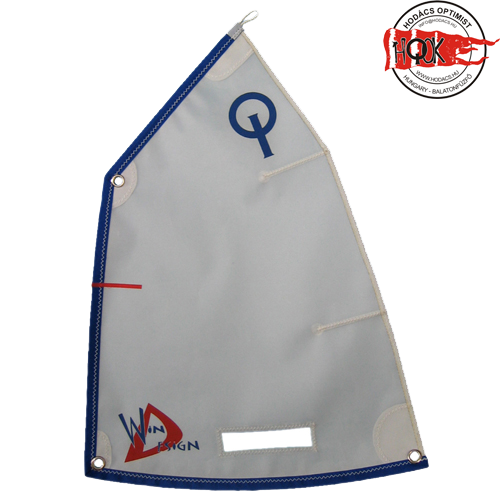
Optimist mini sail, scale 1:6, 47cm high. Made of real Dacron with window and class logo. Reinforced corners with eyelets.
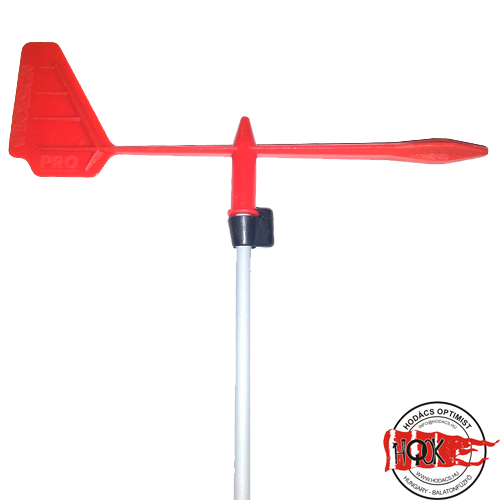
The PRO wind indicator with red vane is specially designed for Optimist dinghies. Its lightweight, durable construction ensures smooth rotation and highly accurate wind direction readings. Easy to attach to the mast, it offers excellent visibility and responsiveness, helping sailors make faster tactical decisions during training or racing. Optimist PRO wind indicator from Optiparts, red.
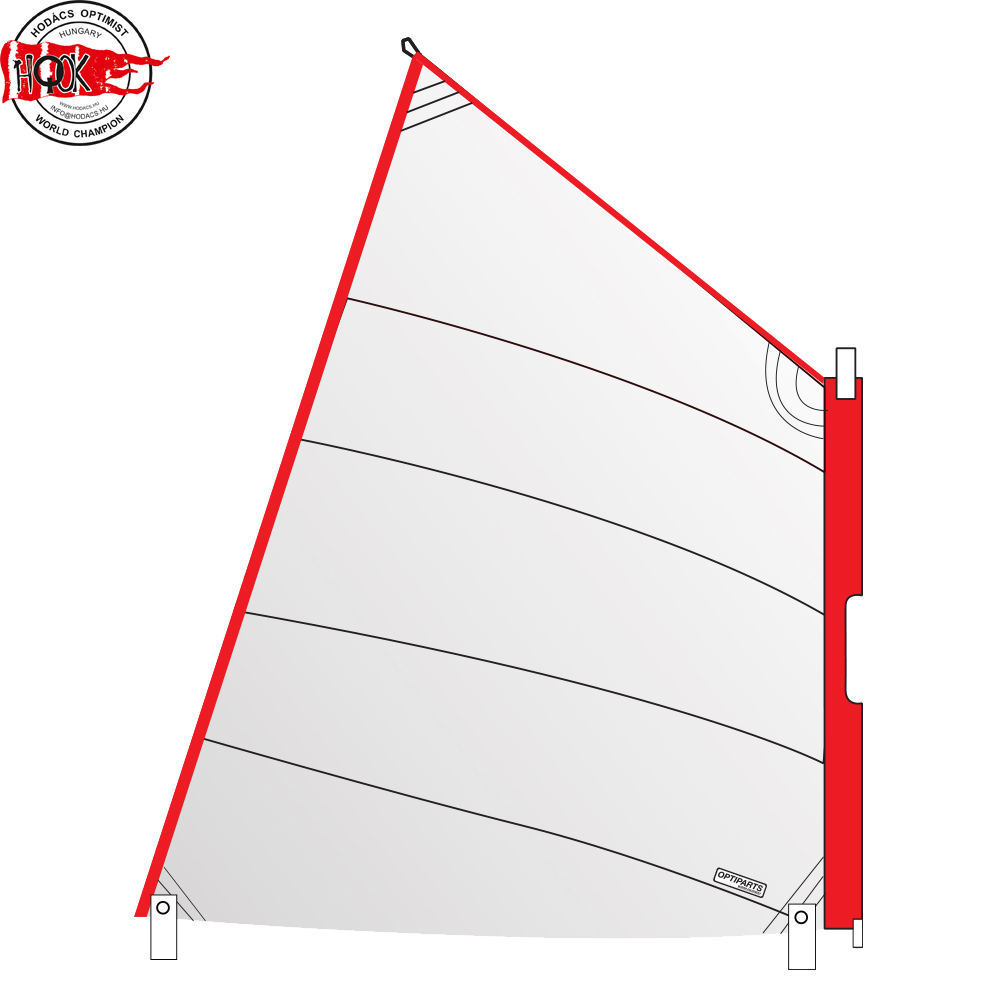
These sleeve pocket sail is ideal for sailing schools. The mast slides in a sleeve pocket while the sail is loose footed on the boom. Made of strong 3.8 oz sailcloth.They have five panels without sailbattens, 4 heavily reinforced corners and webbing loops for the boom. This sail should be used with sleeve school set OW1052.
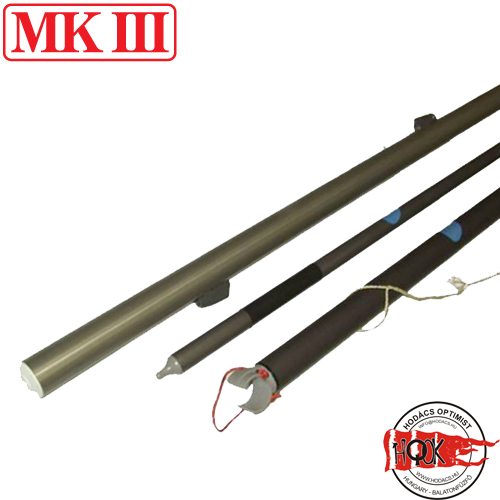
The Optimax MK3 Spar Set for the Optimist dinghy is crafted from superior Lanurep spacecraft alloy with hard-anodized dark grey finish. Suitable for sailors weighing 35–45 kg, this set includes the MK3 mast, 40 mm boom and 27 mm sprit, plus a comprehensive rigging pack featuring Harken ball-bearing hook-in block, Windesign low-friction ring and PRO wind indicator. Designed for race performance, it delivers exceptional stiffness, minimal weight and top-level components for competitive sailing. Complete set of optimist rig with following items:- Optimax MK3 mast- Optimax MK3 boom - 40mm- Optimax MK3 sprit (as standard, or choose one )For the same price the sprit choice is yours, just write it in the order comment: MK3/MK3Flex/MK3HyperflexAlso inclusive rigging pack with: - 2x Nylon top pins - 1x Harken ball bearing hook-in block- 1x Windesign wind indicator PRO - 1x Windesign 25 mm low friction ring - 1x Nylon sprit adjuster handle - 1x 3 mm Dyneema halyard line - 1x 4 mm halyard line - 5x 2.2 mm tack lines - 12x 1.2 mm double lacing lines - 1x Deck collar with mast sleeve.
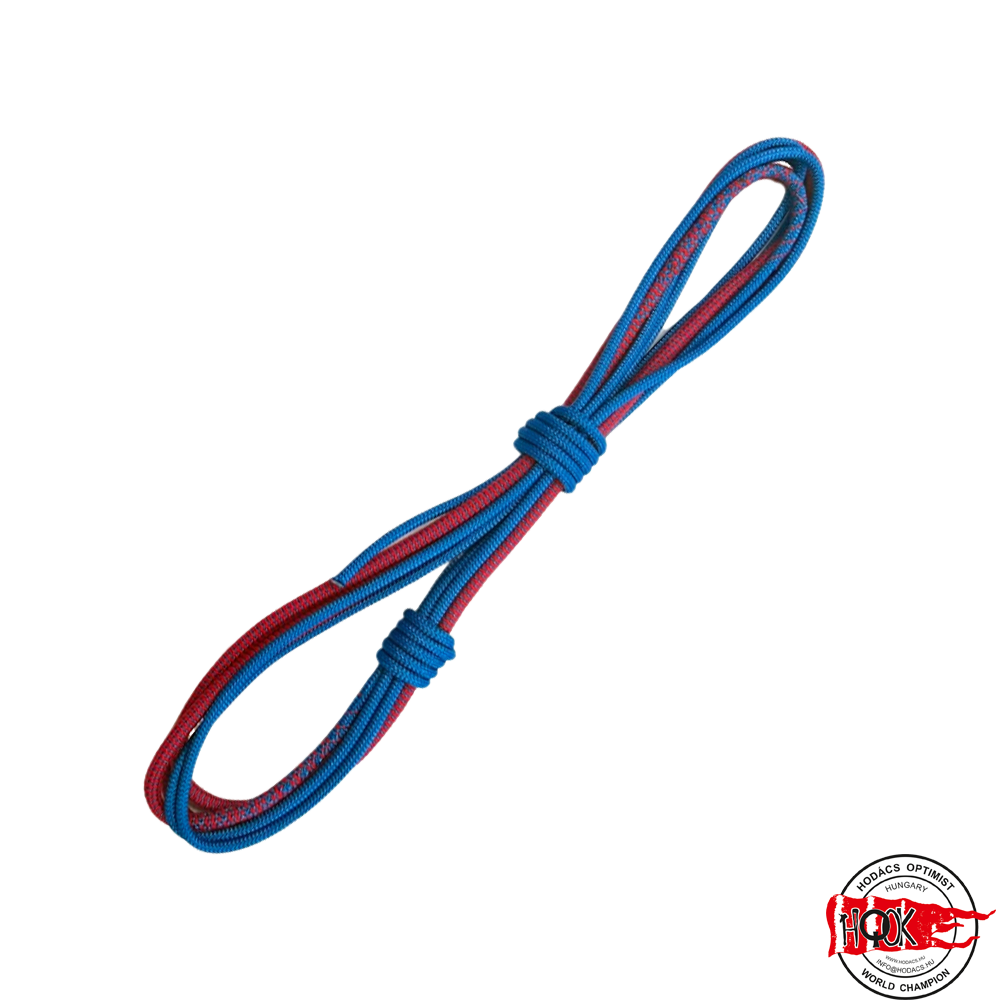
Meet the next-generation Optimist mainsheet — designed for performance, comfort, and smooth handling! Developed with sailors in mind, this 8–6 mm tapered sheet ensures that upwind, the thicker, softer section stays in your hands, while downwind the thinner part runs effortlessly through the blocks. Its abrasion-resistant polyester cover and high-tech HT core combine durability with lightweight flexibility, giving you total control in every maneuver. No cutting or setup required — just tie it in and sail away!Specifications: Diameter: 6–8–6 mm Length: 7 m Material: HT polyester core, cotton-touch / technical polyester coverAs with all ropes and blocks, friction occurs, which is also true for the Optimist ratchet block and mainsheet rope; especially when the ratchet is engaged. Due to this friction, the block will naturally wear the rope over time.