
Age-based development phases in optimist sailing
Why the 10-13 age group is crucial for skill development?
Hello everyone!
I'm starting to realize that exploring topics in depth on a regular basis isn’t as easy as I thought, especially now that we’re in peak season! However, here’s another topic, this time focusing on the various tasks to master and the exercises needed to achieve them.
Now that the spring season and its series of World and European Championship qualifiers have come to an end, it’s time to start preparing for the next major competition. For most Hungarian sailors, this means gearing up for the Hungarian Championships (OB). I’ve written in more detail about calendar planning and peak in my previous post.
Over the next few months, there might be more time for training, as the spring weekends are usually more packed with competitions than summer. Additionally, summer weekdays are more available for practice.
Analyzing the experiences of the spring season can help guide our preparation for Nationals. In general, it’s worthwhile to focus on developing boat-handling skills refininf strategic elements.
An optimist sailor's development can be divided age-based phases. Each phase has its specialties, focusing on what needs to be developed for the sailor to reach an international level.
The phases:
- 8-10 years old:Deepening basic knowledge.
- 10-13 years old:Advancing boat-handling skills to an international level and deepening understanding of racing rules and race srategy and fleet strategy.
- 13-15 years old:Competing successfully at the international level.
These age-based divisions are based on coaching experience. Naturally, what an individual can learn, when, and how will be largely determined by their abilities, motivation, physical condition, and determination.
I usually like to follow a structured approach, but given the peak season, I’ll make an exception. I’ll discuss the first and third phases in future posts. This means that today’s focus will be on the 10-13-year-olds—a particularly exciting age where so much happens.
In this age range, nearly every aspect of sailing needs to be learned and practiced:
- Precise setup of equipment.
- Developing boat-handling skills upwind and downwind in light, medium, and strong winds.
- Maneuvers (such as the multi-tacking game often played in spring)
- Boat handling
- Wave handling
- Speed-adjustment techniques
- Learning starting techniques
- Deepening strategic knowledge (in light, medium, and strong winds as
well):
- At the start
- Upwind
- Downwind
- Deepening understanding of the rules
- Developing endurance and concentration
There is much to do, and the list is nearly endless. So where should we start?
Each coach has their own method of training sailors, but there’s general agreement that a competitor should first achieve good boat speed and aiming—in other words, stable boat-handling skills. Once this is achieved, they can keep up with most of the fleet, staying close to their opponents. Being there allows them to make tactical and strategic decisions that will put them ahead, making this the stage at which strategic thinking is worth developing.
The different skills are generally developed in parallel. For instance, on a training day focused on boat handling, if practice races are held at the end of the day, then not only is boat handling practiced, but the learned techniques are also applied in competitive situations. The practice race can then be analyzed both in terms of boat-handling skills and strategic decisions, meaning both can be addressed simultaneously. And, of course, before heading out, the equipment setup offers daily opportunities for routine building.
Naturally, if there’s wind and good waves, it may not be best to prioritize strategy, as the strong wind conditions should be fully utilized to work on boat-handling skills. This is further emphasized by the fact that Lake Balaton is typically a light-wind lake, so there’s a risk that competitors become overly accustomed to light-wind handling. This becomes a problem when stronger winds arise, and despite familiar movements, the boat may capsizes, heel excessively, the boom may swing across too quickly during a gybe, or water may flood in during an upwind beat.
So, each aspect must be learned in its own time, with some overlap, progressing step by step.
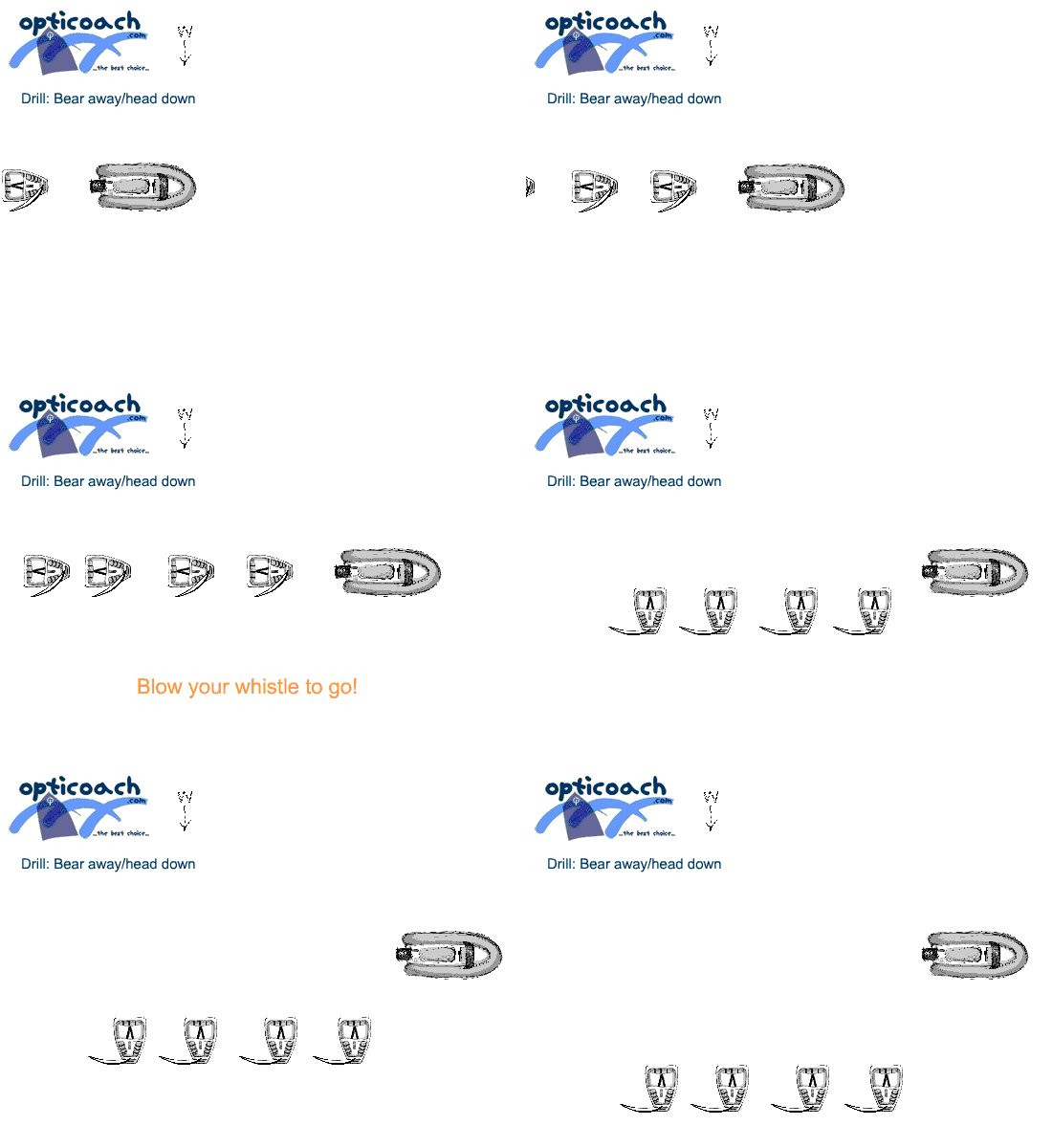
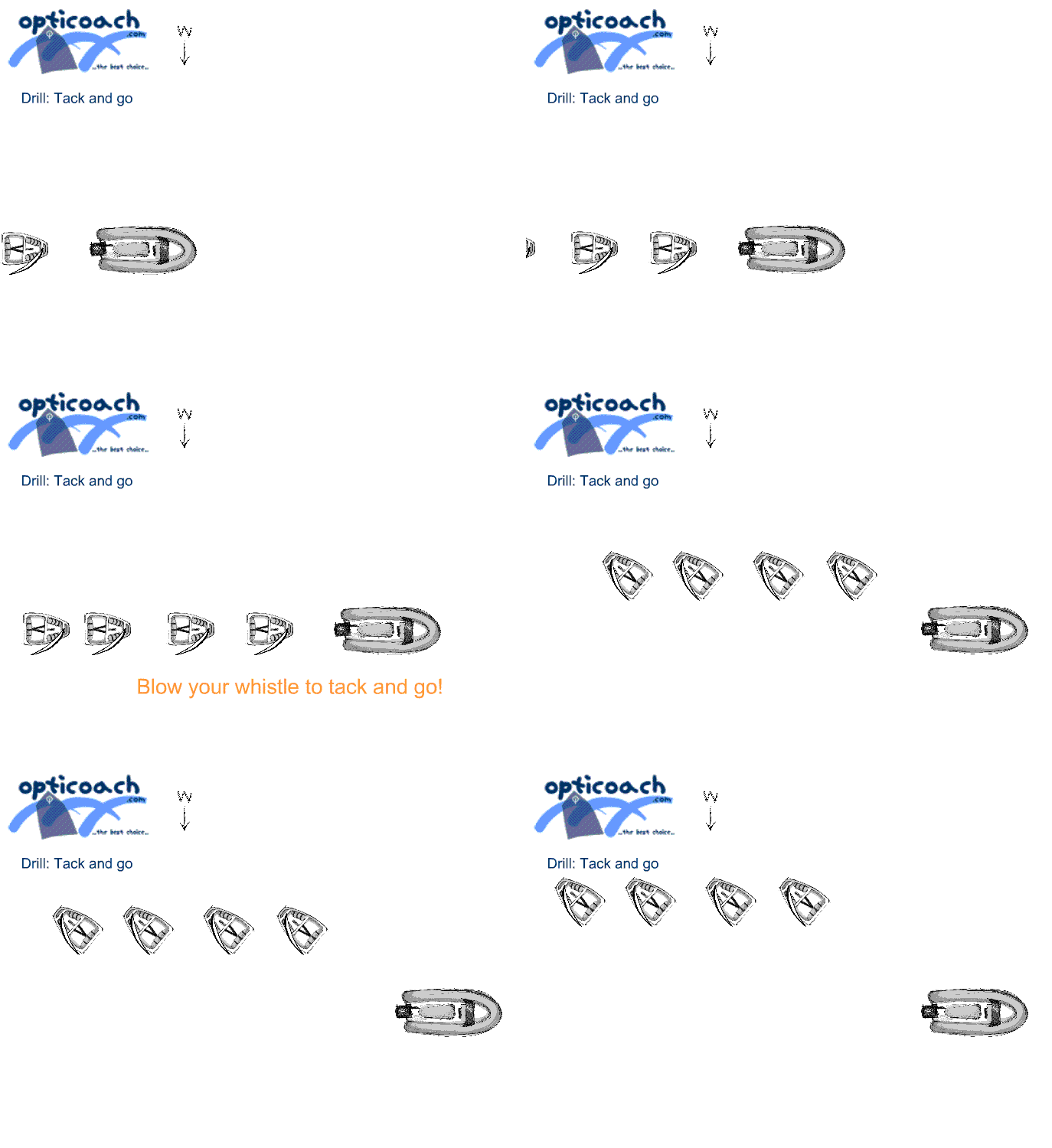
There are countless types of boat-handling exercises. The now-classic exercises of rounding up, bearing away, and circling the coach boat are always useful to keep in your training drillbook. These can be further developed and presented to the competitors.
Warm-up exercises can also be incorporated, such as cage drills, cops-and-robbers games, braking games, or the “stress course.”
There are also plenty of exercises for starting practice, from simple starts to machine-gun starts, non-tack starts, and even zoned starts.
Similarly, upwind and downwind practice can be “repackaged,” keeping competitors engaged.
Summary: It’s
worthwhile to analyze the recent period thoroughly and plan the next few months
accordingly to prepare for the upcomig major competition. Setting small goals can
help motivate and develop the competitor simultaneously.

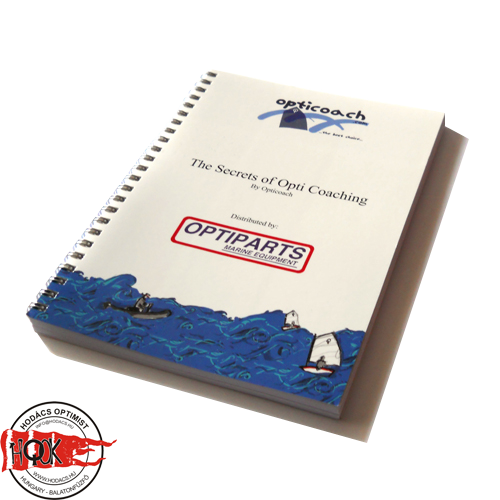
Attila Hodacs reveals 20 years of his coaching experience in this 85 page book. Includes phases of development, how to lead sailors to international level racing, setting up training sessions, how to improve boathandling, strategy and how to minimize mistakes. A must have for every trainer, coach and interested parent.
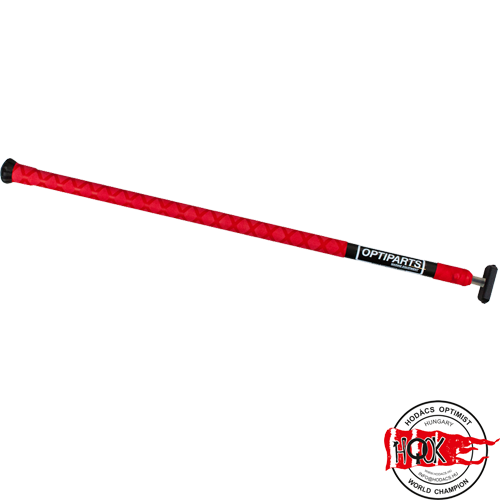
Brighten up your Optimist with these colored 20 mm aluminium tiller extensions. Each comes with X-gripped shrink tubing for a secure hold and a durable, releasable rubber joint reinforced by a rope core.
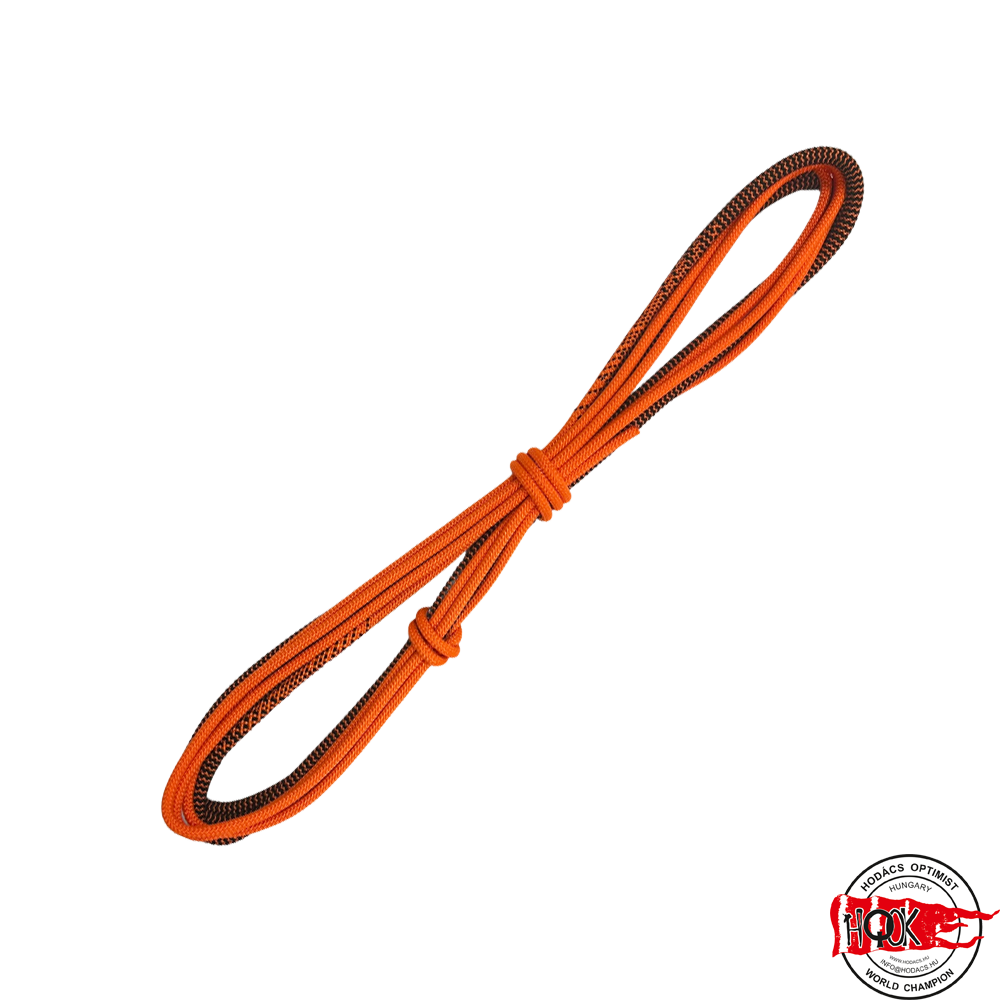
Designed specifically for Optimist sailors, this new mainsheet is ready to go — just tie it at the thinner end for a 3:1 or 4:1 setup and hit the water! The improved length ratios ensure that upwind, the thicker, more comfortable section sits perfectly in your hand, while downwind the tapered section automatically takes over for smoother trimming. The 8–6 mm rope combines a lightweight HT polyester core with a soft, cotton-feel cover, offering both strength and comfort. The tapered ends reduce weight and allow the sheet to glide easily through the blocks.Length: 7 m Diameter: 6–8–6 mm Material: HT polyester core with a polyester/cotton outer cover.As with any mainsheet, friction between the blocks and rope is natural and may lead to wear over time, especially when the ratchet is engaged.