
Evolution of optimist race course
The optimist IODA course layout explained
Hello everyone!
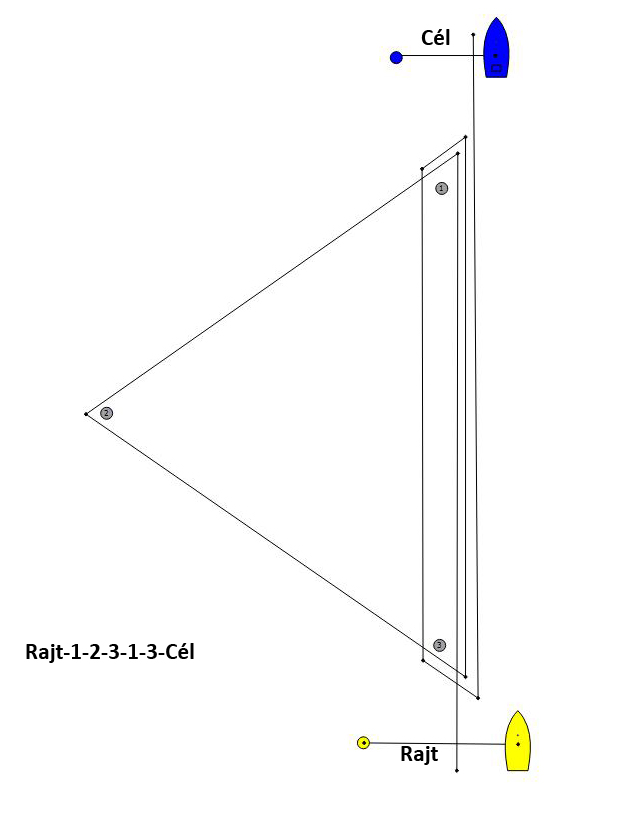
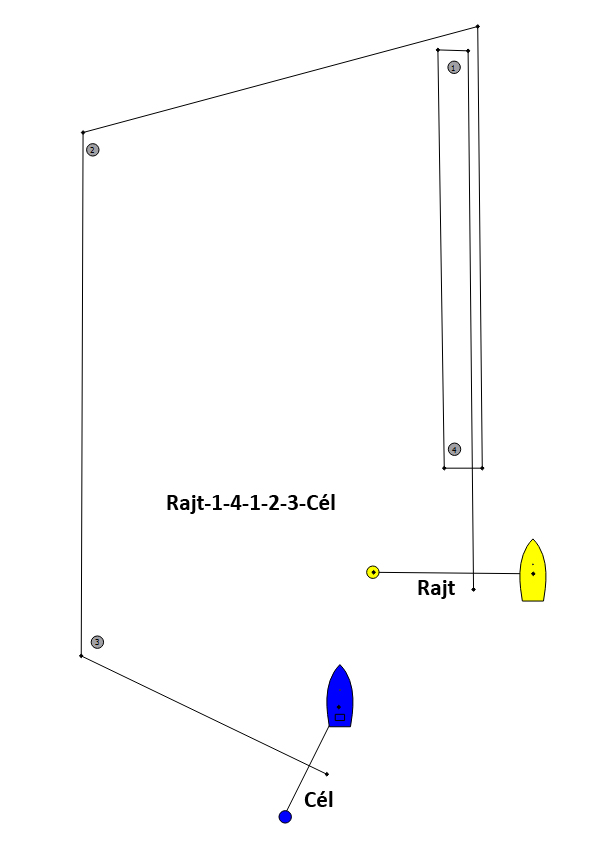
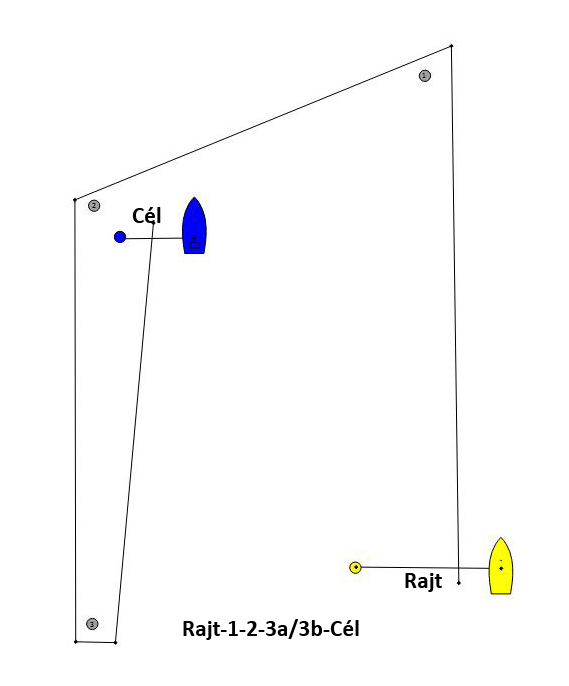
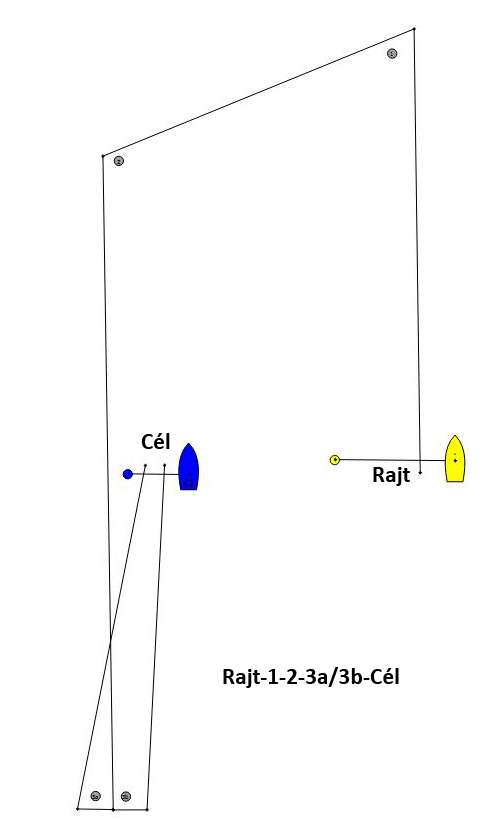
Before diving into the widely used IODA course, let’s look at some course types that were common in earlier years. To help, I’ve created a few illustrations (pardon the art quality!) showing different course layouts.
Up until the early/mid-1990s, both domestically and internationally, the traditional Olympic triangle course (as shown in the first illustration) was the most popular. I’m not sure when exactly it was first used. There were some variations, like a mark specifically for Optimists or having the start/finish boat positioned midway along the upwind leg. Looking back, it was an excellent course layout, but the races often lasted over an hour—sometimes even 1.5 hours.
The Olympic triangle course consisted of three upwind legs, two reaches, and one downwind leg. Winning a start-to-finish race here was a big achievement! Fending off competitors over three upwind legs and making sound strategic decisions was a real art. Of course, if the chasing pack wasn’t very aggressive, then holding them off was somewhat easier. However, if you found yourself at the back, it propably wasn’t the most exciting 60-90 minutes. Today’s shorter 50-minute races offer a better experience. One of the triangle course’s great advantages, though, was that a less-than-perfect start could still be improved significantly.
In the early/mid-1990s, the trapezoid course replaced the Olympic triangle.
The trapezoid courses were shorter, lasting about an hour. The use of inner and outer loops allowed different classes to separate better than on a triangle course. At the time, four-five-six classes would start one after the other and use the same course. Optimists typically did a lap on the inner loop and then continued around the full course.
This course consisted of two upwind, two downwind, and two reach legs.
The importance of downwind sailing increased with this course type. Unlike the triangle course, where strategy mainly focused on upwind sections. The trapezoid required a much stronger downwind skills. Competitors who could plane and execute efficient gybes could gain several places, although the front of the fleet didn’t change much after the second upwind leg.
A variation of the trapezoid is the Optimist IODA course. At international events with a large Optimist fleet, this course was typically used, while the trapezoid was more common in local races. Initially, the IODA course did not include a gate mark.
The IODA course has two upwind legs, one reach, and one downwind leg.
Compared to the trapezoid used in Hungarian races, the IODA course places greater emphasis on upwind sailing. Additionally, with a recommended 45-minute duration, the start becomes crucial. Due to the course structure, after the start and first upwind leg (excluding the reach), there’s little opportunity to make significant gains except on the downwind leg and the final upwind leg to the finish. Leaving everything until the last upwind leg isn’t wise, so a strong start is essential.
Breaking Down the IODA Course by Numbers:
- The course length is recommended to be 45-50 minutes.
- The first upwind leg should take about 18-22 minutes.
This means that one leg alone accounts for 38-48% of the total race duration! In other words, almost half of the race is over by the first mark.
So, the saying “a good start is half the victory” holds true for this course as well.
Objectives for Each Leg of the IODA Course:
- Start:Get a clean start from a good position with optimal speed.
- First Phase After the Start: Maintain high boat speed; the first 50-100 meters are critical.
- Upwind Leg: Make strategically good decisions.
- Reach: Prioritize safety while maintaining high speed and staying alert.
- Downwind Leg:Focus intensely on strategy and boat speed.
- Final Upwind to Finish: Depending on the situation, either maintain safety or push for an aggressive finish.
These leg-specific goals can, of course, be further refined based on:
- Course layout
- Wind strength
- Wave conditions
- Competitors' skills
- The sailor's mental state
You might have noticed that even the original IODA course has evolved, primarily to accommodate large fleets. Previously, the finish line was aligned with the reach mark. Today, at international regattas, the finish is aligned with the start line. This means the downwind leg is now nearly twice as long, while the final upwind leg is typically shorter. Consequently, anyone wanting to gain positions or build a safety margin over their competitors needs to focus intensely on refining their downwind sailing technique. (And just to complicate things, I’d suggest mastering at least three different downwind styles.)
Each leg and its specific tasks - such as understanding rules, meteorology, boat-handling tricks - from the training goals that coaches set, creating a wide range of areas to work on. Don’t worry; mastering these takes years. That’s why it’s important to make the most of every single training day. :)
Summary: It’s
worthwhile to take a moment to think about the course you’re sailing and what
each leg demands. If you can execute the key tasks for each leg well, the
desired results will certainly follow!
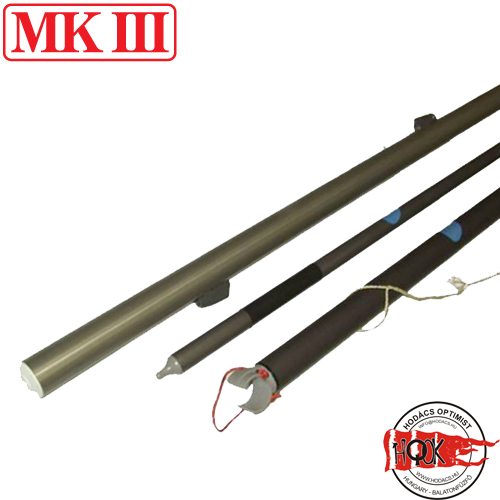
This optimist spar set from Optimax spars is for midweight optimist sailors 35-45kg. Complete set of optimist rig with following items: - Optimax MK3 mast - Optimax MK4 boom - 45mm - Optimax MK3 sprit (as standard, or choose one )For the same price the sprit choice is yours, just write it in the order comment: MK3/MK3Flex/MK3Hyperflex Also inclusive rigging pack with: - 2x Nylon top pins - 1x Harken ball bearing hook-in block - 1x Windesign wind indicator PRO - 1x Windesign 25 mm low friction ring - 1x Nylon sprit adjuster handle - 1x 3 mm Dyneema halyard line - 1x 4 mm halyard line - 5x 2.2 mm tack lines - 12x 1.2 mm double lacing lines - 1x Deck collar with mast sleeve.

Engineered for professional sailors, the Optimum Time OS3 sailing timer combines technical precision with rugged construction. The 65mm ABS housing protects a single-row display with 16mm-high digits for superior legibility. A rotatable face and elastic strap allow easy positioning on your wrist, mast, or boom. The OS3 offers advanced race functionality, including ISAF 5-4-1-0 and custom countdown programs, an audible alarm system, and a unique sync button to instantly align with the race timer. Additional features include a shock-resistant body, water resistance up to 5 ATM, and a bright electro-luminescent backlight for night sailing. For sailors demanding reliability and clarity under pressure, the OS3 remains the benchmark in race timing. Features:- 65mm diameter ABS case- 38mm x 20mm display- single row display with 16mm digit height- adjustable viewing angle- boom/mast mount bracket supplied- adjustable elasticated strap- water-resistant to 5 ATM- shock resistant construction- electro-luminescent backlight featureTimer functions:- normal timekeeping mode (12 or 24 Hours)- pre-programmed 5,4,1,0 ISAF start sequences or 5 min, 3 min, and 1 min programs with audible alarms (can be silenced if preferred)- countdown & repeat or countdown and up- sync button for instant synchronisation if a gun is missed- count-up from zero
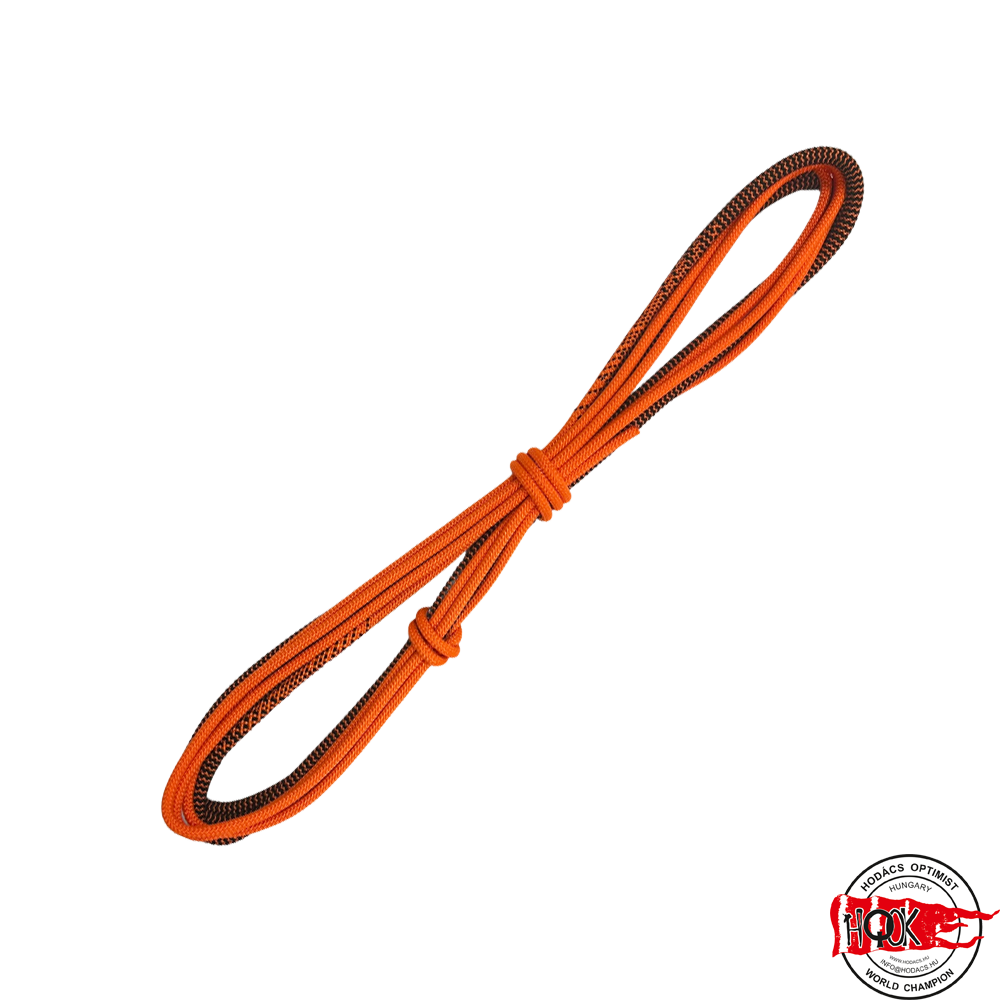
Designed specifically for Optimist sailors, this new mainsheet is ready to go — just tie it at the thinner end for a 3:1 or 4:1 setup and hit the water! The improved length ratios ensure that upwind, the thicker, more comfortable section sits perfectly in your hand, while downwind the tapered section automatically takes over for smoother trimming. The 8–6 mm rope combines a lightweight HT polyester core with a soft, cotton-feel cover, offering both strength and comfort. The tapered ends reduce weight and allow the sheet to glide easily through the blocks.Length: 7 m Diameter: 6–8–6 mm Material: HT polyester core with a polyester/cotton outer cover.As with any mainsheet, friction between the blocks and rope is natural and may lead to wear over time, especially when the ratchet is engaged.