
Scoring systems in optimist sailing explained
Hello everyone!
This post, which dives into different scoring systems, links back to the previous discussion on course types Although scoring may seem straightforward, it certainly has its nuances!
Sailors who competed on the classic Olympic triangle course likely remember the scoring system at the time: the "bonus" or high-point system. (According to Wikipedia, this system has been in use since the 1968 Olympics.)
To clarify, here’s a summary table comparing the
bonus system with the current low-point scoring system:
|
Palce |
Bonus System (previously used, points awarded) |
Low-Point System (current, points awarded) |
|
1st |
0 |
1 |
|
2nd |
3 |
2 |
|
3rd |
5,7 |
3 |
|
4th |
8 |
4 |
|
5th |
10 |
5 |
|
6th |
11,7 |
6 |
|
7th+ |
place number + 6 |
place number |
Key Differences Between the Systems:
- Bonus System: Between 1st and 6th place, there was more than a one-point difference between positions, but from 7th onward, just like in today’s system, each subsequent place differed by only one point.
- Low-Point System: No extra “reward” for finishing early; the point difference between 1st and 2nd is the same as between, say, 20th and 21st place.
On the Olympic triangle course, with its three upwind legs, two reaches, and one downwind leg, it was crucial to finish in the top six to secure bonus points. With the shift to trapezoid courses in fleet racing, the low-point scoring system was introduced—where your score directly reflects your finishing position. I remember the initial confusion when this system was first introduced! The goal was to make competition outcomes tighter, reducing large point gaps.
There’s room for debate about whether it’s ideal that, in a 100-boat fleet, finishing first versus second carries the same point difference as finishing ninety-ninth versus one-hundredth. This system underscores the importance of every point since a single point lost to a wind shift, wave, or missed opportunity could make all the difference in the final standings.
The Value of a single point in fleet racing
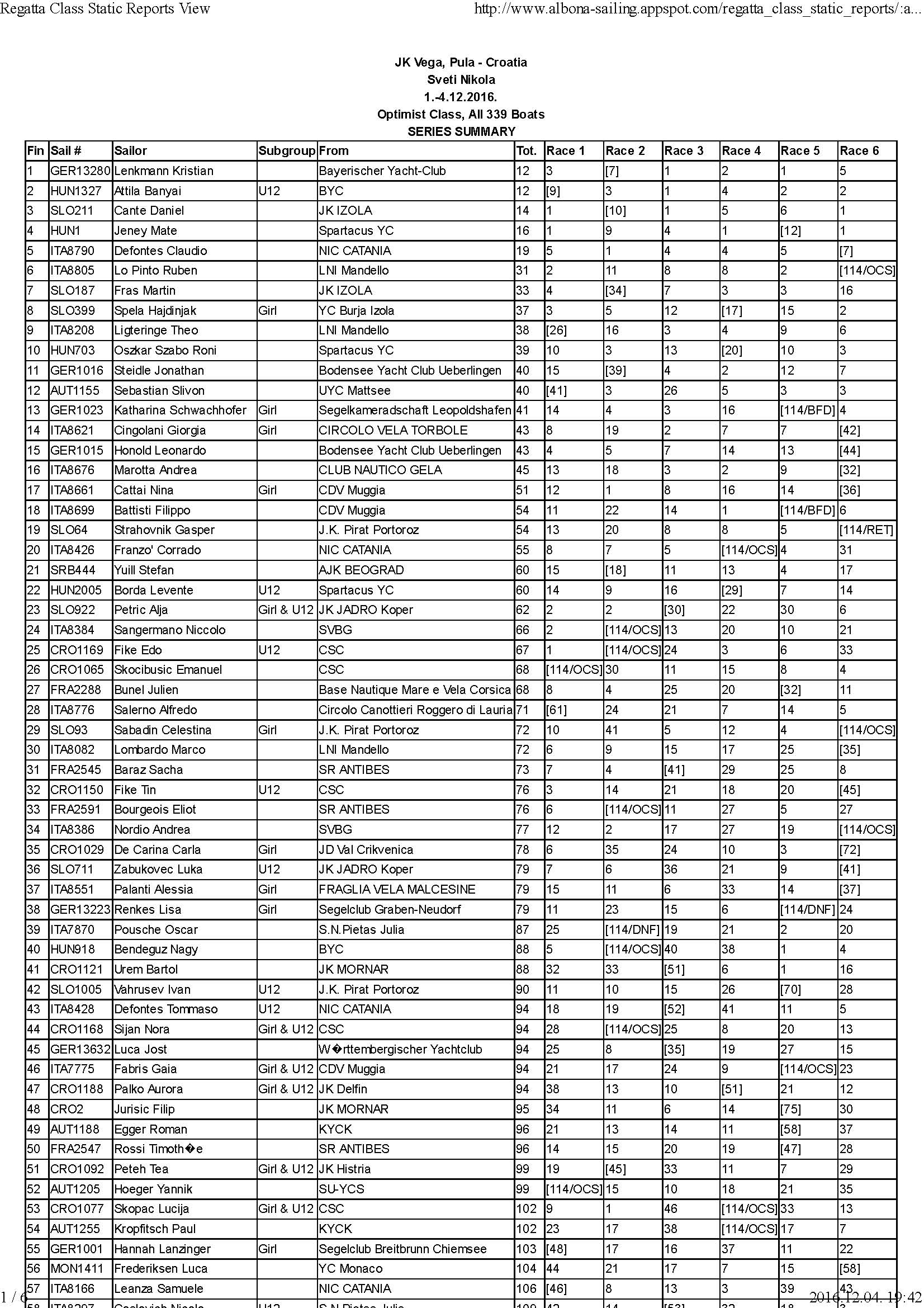
Looking at Hungarian Championships from 2005 to 2017 (the only results I have on hand), one point made the difference in four out of thirteen youth championship titles—over 30% of the cases! In three instances, there was a one-point gap between first and second place, and in one case, the two sailors were tied on points. For those involved, that single point made a world of difference.
Group
Assignments in Large Fleets
In larger regattas, where the fleet can’t start
together, sailors are divided into groups, adding another dimension to scoring.
Two main grouping systems are typically used:
- Daily re-assignments based on performance.
- Qualifying races, followed by grouped races (Gold/Silver/etc.), where sailors stay in their assigned group for the finals.
While groups are reassigned daily, finishing place and the points awarded within that group carry more weight when calculating overall standings.
Example:
Let’s say you’re racing at the Mikulás Cup in
Pula with 300 sailors split into three fleets. You finish 15th, earning 15
points. Unfortunately, there’s also a 15th place in each of the other two fleats. This places you 45th overall. If you had overtaken just
one more boat, you’d improve your overall ranking by three points!
In larger fleets, places are multiplied by the number of groups, which makes consistent finishes even more critical. Practical experience shows that finishing between first and tenth typically keeps you within the top 10 in the final result, while a fifteenth-twentieth or lower result can multiply based on the number of groups.
Strategic
Impact on Group Rankings
If there are five qualifying races, and you pass
just one boat before the finish in each race, you would improve by three points per
race or 15 points overall! This could be the difference between making a
higher-ranked group, impacting your selection points (e.g., Palamós/Workum, which
are also selection events). At these events, with five groups, each missed
place means a potential loss of five points—or five points gained by overtaking
one more boat.
Summary: When sailing in a large fleet, it’s essential to keep the scoring system in mind as part of your fleet strategy. Overtaking even one boat can make a significant difference in your final ranking, so fight until the end—every point matters!
Good luck, and remember, every point counts!

Designed specifically for Optimist sailors, this new mainsheet is ready to go — just tie it at the thinner end for a 3:1 or 4:1 setup and hit the water! The improved length ratios ensure that upwind, the thicker, more comfortable section sits perfectly in your hand, while downwind the tapered section automatically takes over for smoother trimming. The 8–6 mm rope combines a lightweight HT polyester core with a soft, cotton-feel cover, offering both strength and comfort. The tapered ends reduce weight and allow the sheet to glide easily through the blocks.Length: 7 m Diameter: 6–8–6 mm Material: HT polyester core with a polyester/cotton outer cover.As with any mainsheet, friction between the blocks and rope is natural and may lead to wear over time, especially when the ratchet is engaged.
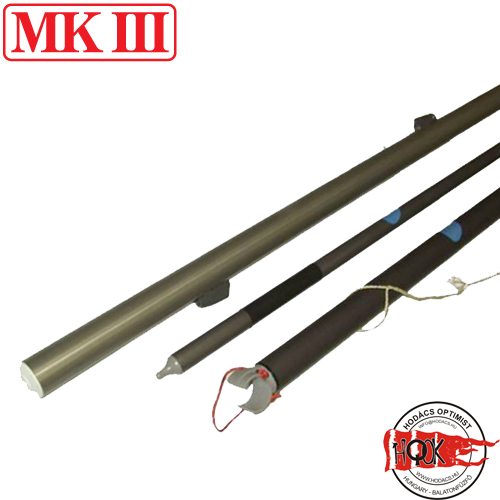
This optimist spar set from Optimax spars is for midweight optimist sailors 35-45kg. Complete set of optimist rig with following items: - Optimax MK3 mast - Optimax MK4 boom - 45mm - Optimax MK3 sprit (as standard, or choose one )For the same price the sprit choice is yours, just write it in the order comment: MK3/MK3Flex/MK3Hyperflex Also inclusive rigging pack with: - 2x Nylon top pins - 1x Harken ball bearing hook-in block - 1x Windesign wind indicator PRO - 1x Windesign 25 mm low friction ring - 1x Nylon sprit adjuster handle - 1x 3 mm Dyneema halyard line - 1x 4 mm halyard line - 5x 2.2 mm tack lines - 12x 1.2 mm double lacing lines - 1x Deck collar with mast sleeve.
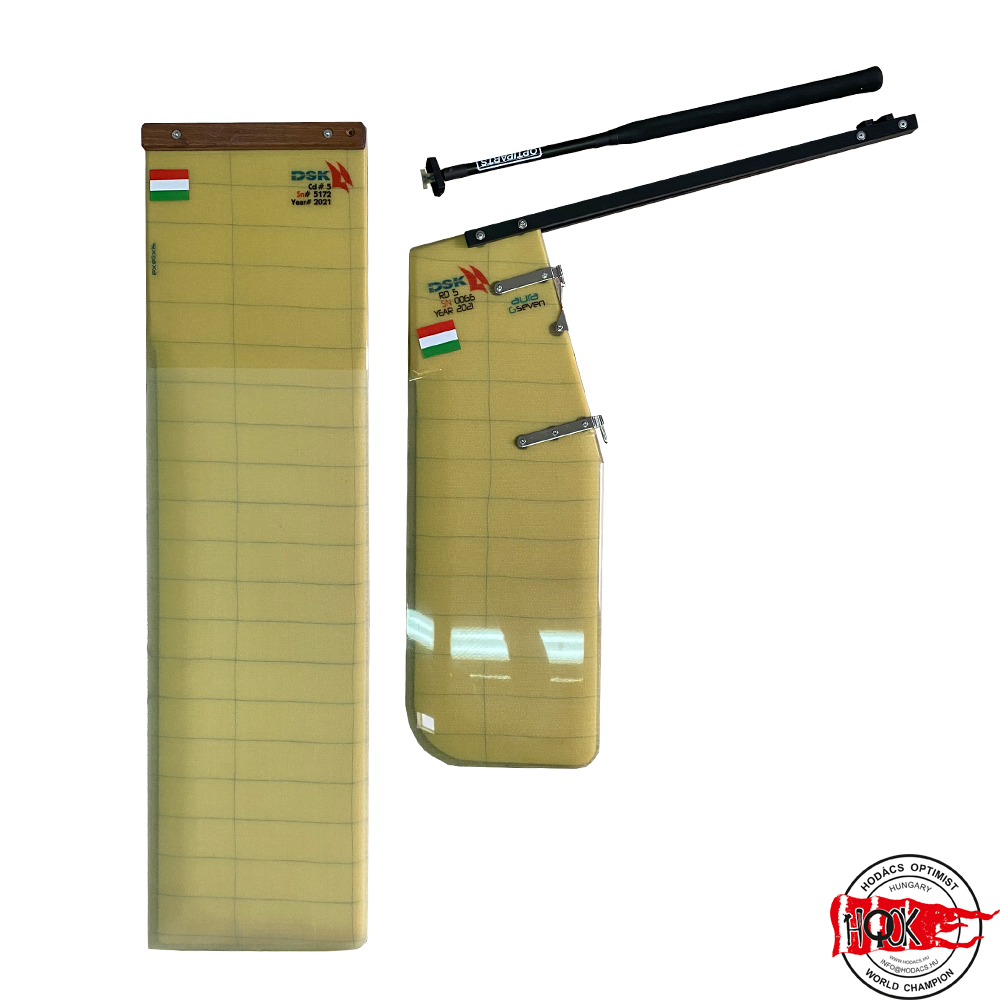
Set contains:- daggerboard- rudderblade with fittiings- black anodized tiller- Deluxe tiller extension